
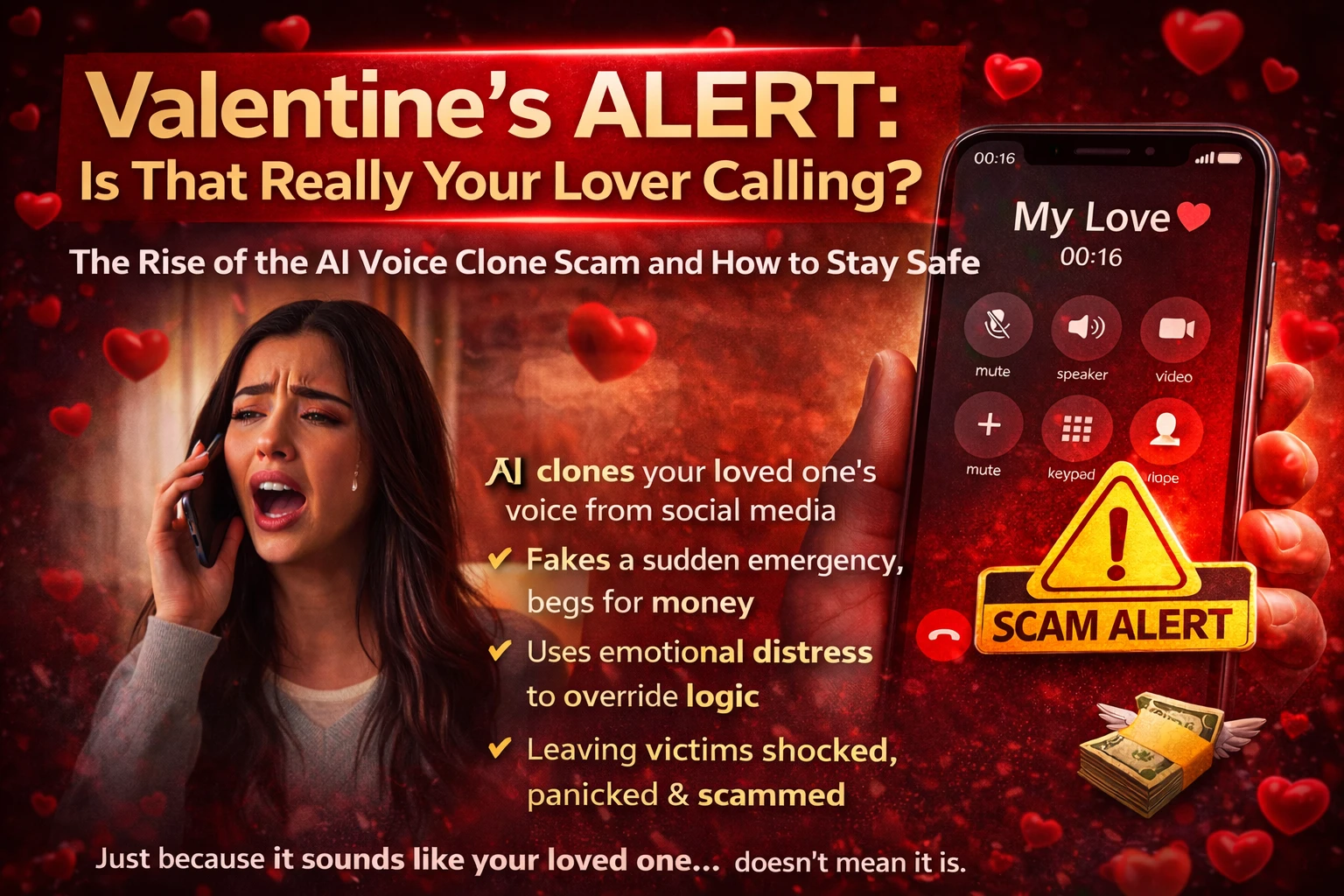
The Rise of the AI Voice Clone Scam and How to Stay Safe
Valentine’s Day is all about love, trust and relationships. But in 2026, cybercriminals have found a disturbing way to exploit emotions using artificial intelligence. A new global scam is spreading rapidly – the AI voice clone fraud – and it’s leaving victims emotionally shaken and financially debilitated.
Imagine: Your phone rings. The voice on the other end sounds exactly like your partner, sibling, or close friend. They look scared. They say it’s an emergency. They need money immediately. You panic – and that’s exactly what scammers want.
Welcome to the age where your loved one’s voice can be weaponized.
What is AI Voice Clone Scam?
The AI voice clone scam uses advanced voice replication technology to mimic real people with shocking accuracy. Scammers collect small audio samples from public platforms like Instagram Stories, WhatsApp statuses, YouTube videos or voice notes – sometimes as long as 3 seconds.
Once they have that sample, AI tools recreate the person’s tone, pitch, accent and emotional expressions. The cloned voice is then used to make phone calls that sound frighteningly real.
These calls usually include:
- sudden emergency
- emotional distress
- urgent request for money
- pressure to act immediately
The goal is simple: to defeat logic with emotion.
Why does Valentine’s Day make it worse?
Scammers strategically time these attacks around emotional occasions like Valentine’s Day. During such moments:
- People expect calls from loved ones
- emotional vulnerability is high
- trust naturally diminishes
- economic generosity increases
A call saying “I’m in trouble, please help me” sounds believable when love is already in the air. This emotional manipulation is what makes scams so dangerous.
How Scams Usually Work (Step-by-Step)
audio collection
Hackers scrape short voice clips from social media or messaging apps.
voice cloning
AI software recreates the voice with realistic emotions like nervousness, fear or crying.
call
Victims receive calls from an unknown or fake number.
story of emergency
The cloned voice claims to be about an accident, arrest, kidnapping or medical emergency.
demand for money
Victims are asked to send money through UPI, gift card, crypto or wire transfer.
to disappear
Once the payment is sent, the scammer disappears.
Real-world impact: more than just money
Although the financial loss is serious, the emotional damage can be even worse. Victims report:
- Trauma from hearing a loved one “cry”
- Guilt after realizing it’s fake
- loss of trust on phone call
- Anxiety during future emergencies
This scam doesn’t just steal money – it also steals peace of mind.
How to stay safe from AI voice clone scams
1. Create a private safe word
Pick a random word or phrase that only you and your loved one know (for example: “blueberry pizza”).
If ever an emergency call comes in, ask for the safe word. AI can mimic voices – not secrets.
2. Always call back
If you get a panicking call from a new or unknown number, hang up. Call the person back on their saved contact number.
Most scams end immediately at this stage.
3. Use video calls
AI voice is improving rapidly, but AI video still has glitches.
Ask the caller to switch to a video call before sending any money.
4. Slow down
Scammers rely on urgency. Wait a moment. breathe. Please attest it.
No real emergency will disappear because you took 2 minutes to confirm.
5. Limit public voice sharing
Avoid posting too explicit sound clips publicly. The less audio is available online, the more difficult it will be for scammers to clone it.
Why is this scam difficult to detect?
Traditional signs of fraud like a robotic voice or poor grammar no longer apply. AI-generated voices can:
- cry with confidence
- stop naturally
- use emotional language
- speak in a familiar tone
This leaves even tech-savvy users vulnerable.
What are the officials saying?
Law enforcement agencies around the world are now issuing alerts about AI-based impersonation fraud. Cybersecurity experts warn that as AI tools become cheaper and more accessible, voice scams could become as common as phishing emails.
The main defense is no longer just technology – it’s awareness.
Final Thoughts: Trust, but Verify
You should never feel rushed, scared, or pressured into sending money out of love. In today’s AI-powered world, verification isn’t distrust – it’s security.
This Valentine’s Day and beyond, remember:
Just because it sounds like your loved one… doesn’t mean it is.
Be alert. Stay informed. stay safe.
Unique FAQs
Yes. Modern AI tools can generate realistic voice replicas using as little as 3–10 seconds of audio.
They are not unsafe, but publicly shared voice content can be misused if privacy settings are open.
Yes. Advanced voice models can simulate fear, urgency, and emotional stress convincingly.
In most cases, no. Once money is transferred voluntarily, recovery is very difficult.
No. Valentine’s Day is a high-risk period, but these scams happen year-round during emotional events.