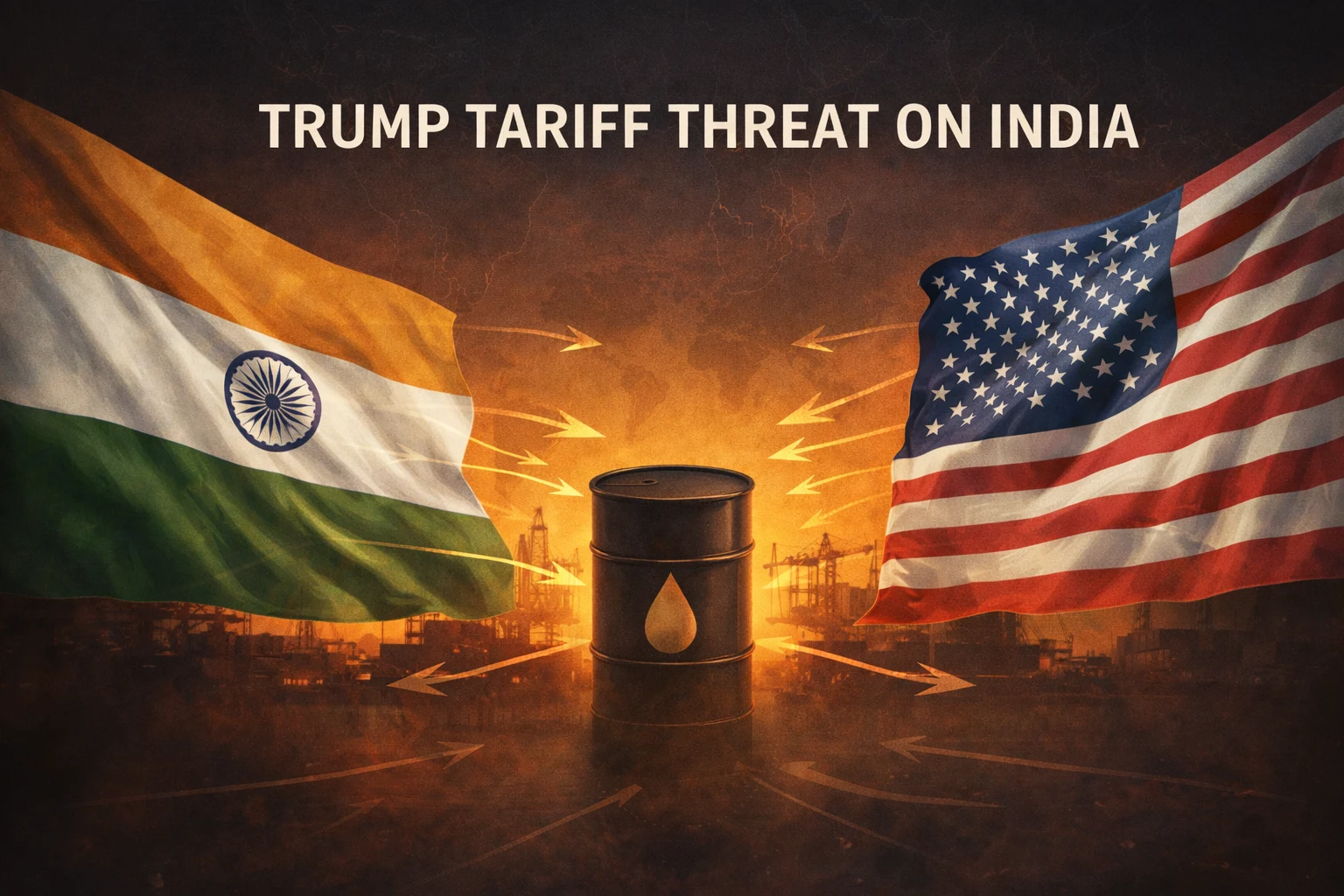
Global trade relations are once again under scrutiny after reports that Donald Trump has threatened new tariffs on India, reportedly linked to concerns over India’s purchase of Russian oil.
The situation highlights how energy politics, sanctions and trade policy are increasingly intertwined.
Why is Russian oil at the center of this issue?
Since the Ukraine conflict, Russia has redirected most of its oil exports to countries willing to buy at discounted prices. As a major energy importer, India has increased purchases to manage domestic fuel costs.
From a trade policy perspective in the United States, this raises concerns about the effectiveness of sanctions and global pressure on Moscow.
Tariff as a political signal
Tariffs are rarely merely economic tools – they are political signals. Threatening new duties allows leaders to:
- exert pressure without immediate struggle
- influence foreign policy decisions
- Send message to domestic voters
In this case, tariffs would signal dissatisfaction with India’s energy strategy rather than a breakdown in broader diplomatic ties.
Newswell Insight
Trade threats are often aimed at reshaping behavior, not ending the partnership. India and the US remain strategic partners, but energy choices are testing the resilience of that relationship.
Impact on India-US relations
India and America have deep ties in the fields of defence, technology and investment. However, trade frictions may occur:
- Increase in costs for exporters
- Create uncertainty for investors
- complicating diplomatic negotiations
Even the possibility of tariffs could impact markets before any policy is implemented.
Energy security Vs geopolitical pressure
India’s stance is rooted in energy security. With rising global prices, subsidized Russian oil provides economic stability. However, balancing domestic needs with international expectations remains a delicate challenge.
Newswell Insight
The episode reflects a larger global dilemma: it is becoming increasingly difficult to separate energy independence from geopolitical alignment. Countries are increasingly forced to choose between affordability and strategic signaling.
What happens next?
At this stage, the tariff threat remains a report rather than an implemented policy. Diplomatic engagement, negotiations and strategic messaging will likely shape the outcome.
Trade tensions may increase or gradually decrease depending on broader geopolitical developments.
Conclusion
The reported tariff threat underscores how global trade is no longer driven solely by economics. Energy flows, sanctions and political situations now directly affect market access.
For India and the US, the challenge lies in managing disagreements without weakening the strategically important relationship.
Frequently Asked Questions (FAQ)
Because many Western countries aim to limit Russia’s revenue through sanctions.
Yes, but such steps often involve political and economic calculations.
No, currently, those are reported threats, not confirmed actions.
They could increase costs and reduce competitiveness in US markets.
Relations remain strong, but trade tensions could cause short-term friction.