
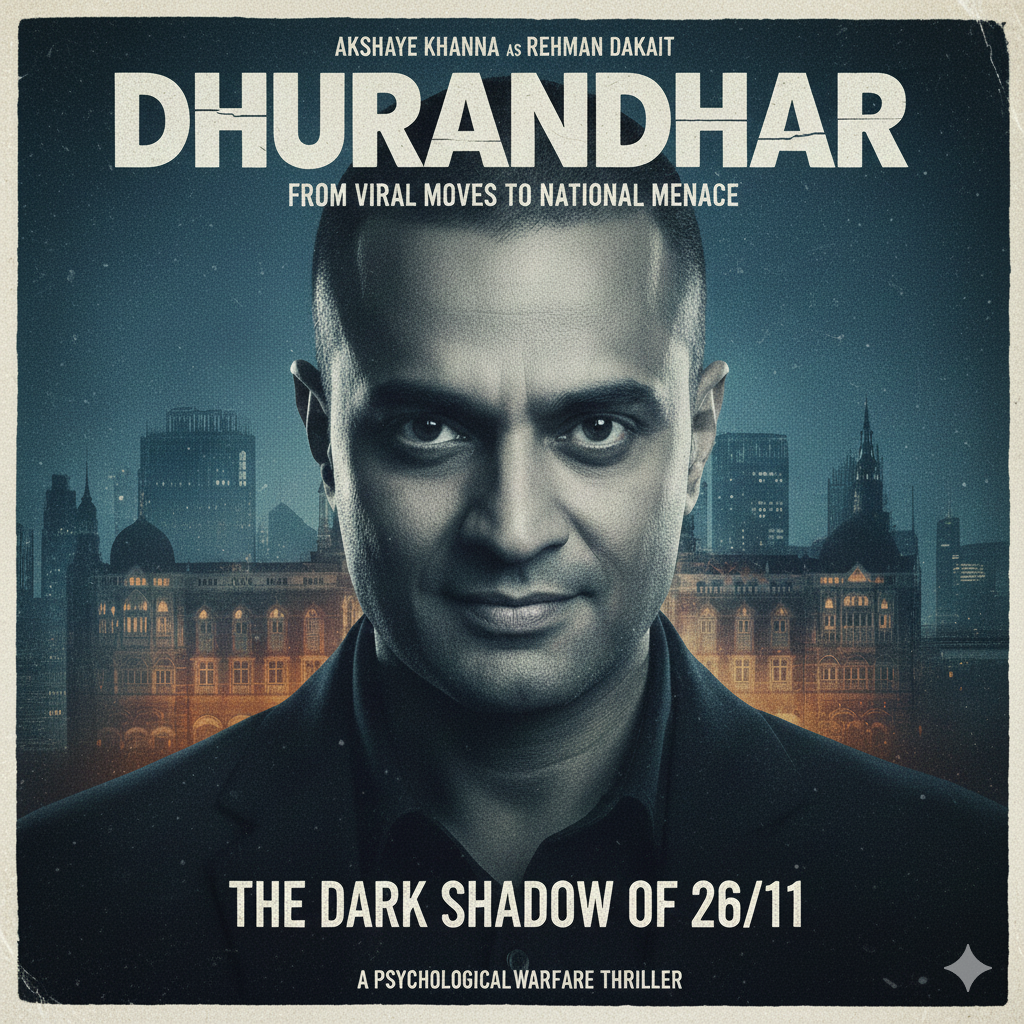
There is rarely a moment in Bollywood when a scene changes people’s perception about an actor overnight. Yet that’s exactly what happened when Akshay Khanna’s viral dance sequence in Dhurandhar went viral on social media. What started the curiosity – “Akshay Khanna is dancing?” – soon turned into something much more intense and disturbing. Because behind the swagger, rhythm and style is Rehman Dakait, one of the most dangerous villains.
As reels, memes, and remixes flooded Instagram and X, viewers soon realized that the dance wasn’t made to entertain — it was made to scare. It was a statement of power. a warning. and the entrance of a character whose ambitions, ideologies and actions directly threaten India’s sovereignty, peace and internal security within the film’s story.
Viral entry that wore the mask of a demon
The introduction of Rehman Dakait in Dhurandhar is confusing by design. The rhythmic pace, calm confidence and almost celebratory tone lulls the audience into a false sense of enchantment. But director Aditya Dhar uses this moment to subvert expectations – making it clear that this is not a dashing villain, but a strategic hunter.
Akshaye Khanna has played the role of Rehman in a very restrained manner. His smile is measured. His eyes never wander. Every activity suggests calculation. This is not a man driven by anger – but by ideology, vengeance and long-term instability.
Viral dance becomes symbolic: Rahman is celebrating anarchy
Who is Rahman the Dakait in Dhurandhar?
In Dhurandhar,Rehman Dakait character explanation is portrayed as a cross-border terror mastermind with deep roots in the underworld, who operates through sleeper cells, weapons networks and ideological warfare. The character takes inspiration from real historical criminals, but the film presents a fictional composite antagonist designed to represent the architecture of modern terrorism rather than an individual.
This distinction is important.
- Rahman the Dakait of Dhurandhar is not just a gangster. That is:
- a radical strategist
- financier of terrorist module
- A coordinator between crime syndicates and extremist organizations
- A man obsessed with humiliating the Indian state
His ultimate goal is not money – it is psychological warfare.
26/11 Connection: A Cinematic Explanation
One of the most discussed and controversial aspects of Dhurandhar is its narrative connection to the 26/11 Mumbai terrorist attacks, specifically the Taj Hotel siege.
It is important to clarify:
👉 The extremists do not claim that Dakait Rehman was the real culprit of 26/11.
👉 Instead, the film uses a fictional intelligence framework to explore how individuals like Rahman could exist behind the scenes – funding, facilitating and exploiting terrorist incidents.
The film’s story depicts the Dakait Rahman as a person who:
- 26/11 operation was already known
- used chaos to increase their influence
- Helped repatriate funds, weapons and communication channels following the attacks
- Profited from the instability that followed
The Taj attack becomes a turning point in Dhurandhar – the moment Rahman realizes how much psychological damage terror can do to India.
From that point onward, his mission escalates.
Terror as a strategy, not violence
What makes Rehman Dakait particularly dangerous and extremely disturbing is that it does not glorify violence. He turns it into a weapon.
In the film, he believes that terrorist attacks are not ends in themselves but tools:
- break public morale
- expose intelligence flaws
- create distrust between citizens and the state
- Embarrassed India at international level
This mentality is what separates Rahman from traditional Bollywood villains. He is not impulsive. He waits for years. He studies reactions. He evolves.
Akshaye Khanna’s portrayal captures this development brilliantly – showing that Rehman becomes more patient, more silent and more deadly as the story progresses.
Direct threat to India’s sovereignty
As Dhurandhar unfolds, it becomes clear that Rahman the Dakai’s ultimate ambition is to challenge India’s sovereignty.
Not through invasion – but through erosion.
In subsequent acts of the film, Rahman has been linked to:
- Attempts to destabilize border areas
- Radical recruitment through digital propaganda
- targeting economic infrastructure
- Manipulating communal fault lines
He believes that it is easier to break a divided nation from within than to attack from outside.
This ideology is where the character becomes truly sinister – because it mirrors modern asymmetric warfare, where enemies don’t wear uniforms and the battlefields are psychological, digital, and ideological.
Why does Rahman the Dakait seem real?
The audience reactions clearly suggest one thing: Rehman Dakait doesn’t feel like a “film villain”.
- That feels possible.
- This comes realism:
- Minimal background score during their scenes
- naturalistic dialogue delivery
- lack of melodrama
- Akshay Khanna’s controlled performance
There are moments when Rahman does nothing – just listens – and still dominates the frame. That silence speaks not of brute force, but of confidence rooted in long-term planning.
Public reaction and cultural impact
- Since his release, Rahman became a Dakait :
- A trending character on social media
- A reference point in discussions about cinematic terrorism
- A benchmark for “intelligent adversaries” in Bollywood
Dhurandhar’s clips are widely shared not because of the action but because of the dialogue, pauses and expressions. Audiences are quoting Rahman not out of admiration, but out of uneasiness.
That inconvenience is intentional.
Akshaye Khanna’s career defining performance
Many critics are already calling Rehman Dakait as Akshay Khanna’s best performance.
Unlike staunch opponents of the past, Khanna poses a threat through the following:
- eye movement
- breath control
- peace
- time
He doesn’t try to dominate the narrative – he forms its basis. And in doing so, he reminds the audience that the most dangerous enemies are not those who scream – but those who wait.
Final Thoughts: Bollywood needs a villain
Rahman uses the
Dakait to unearth inconvenient truths:
- terrorism is strategic
- Threats to sovereignty are often invisible
- the real war is psychological
By framing the narrative around a character linked to moments like 26/11 – even fictionally – the film forces audiences to confront how fragile peace can be when extremism is allowed to grow in the shadows.
Disclaimer : This article is based on movie reviews, critics’ reactions, and publicly available sources like, times of India and wikipedia,. All references are made within the context of the film Dhurandhar and are intended only for entertainment and informational purposes. Newswell.info does not express personal opinions or make real-world claims.
Wants to read more : http://newswell.info/indigo-flights-crisis-explained/
