
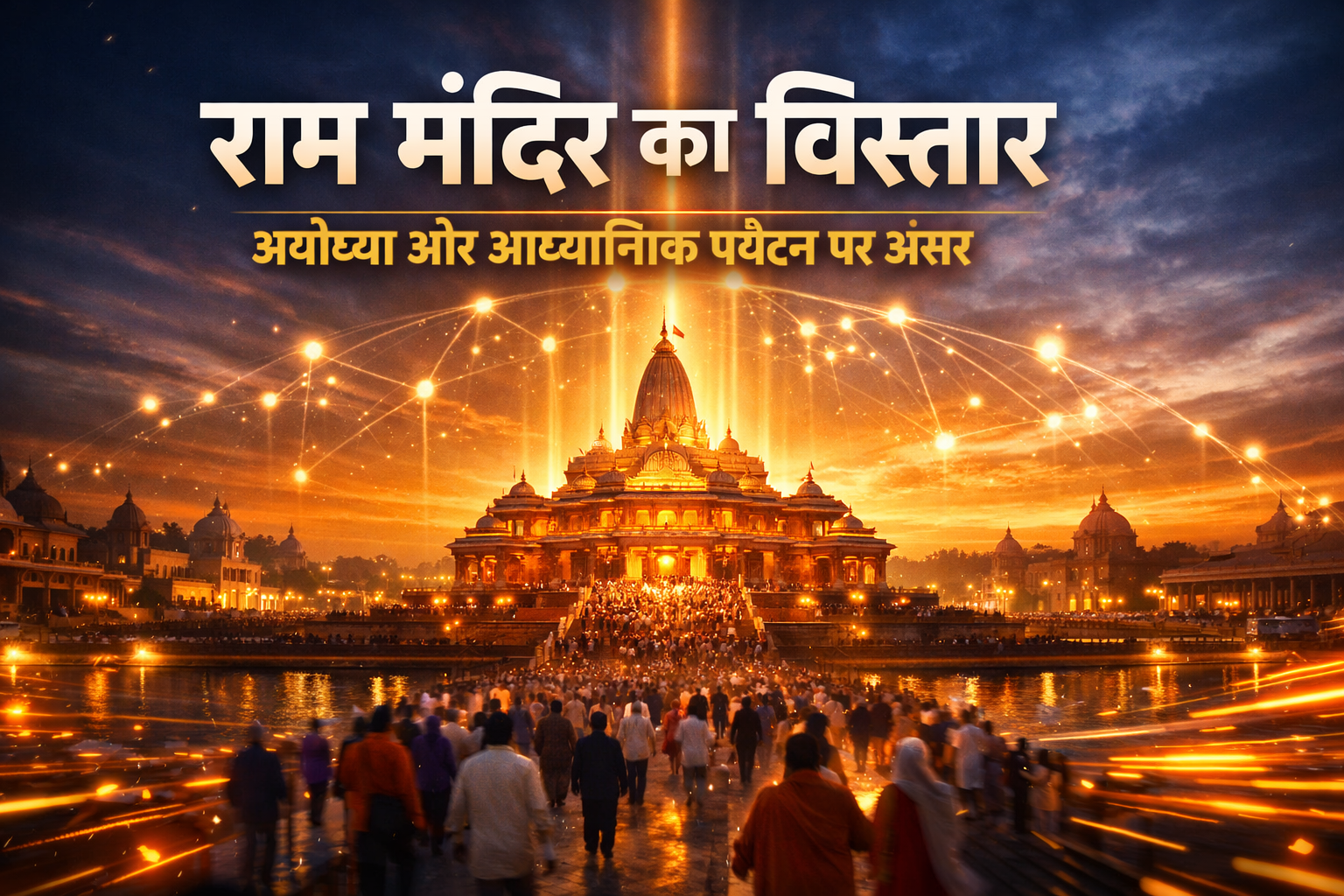
The Ram Mandir in Ayodhya is entering a new phase – not in construction, but in capacity, operations and long-term vision.
According to recent reports, preparations are underway to expand the darshan system and hire more priests, a move aimed at handling the unprecedented surge of pilgrims while strengthening Ayodhya’s position as a global hub of spiritual tourism.
This development may appear superficially administrative, but it has deep religious, economic and policy-level implications. From crowd management to tourism economics, the expanse shows how faith-driven infrastructure is shaping modern India.
This analysis from NewsWell explains what’s happening, why it matters and what happens next.
Why is the expansion happening now?
Since the Pran Pratishtha ceremony in early 2024, the Ram temple has witnessed extraordinary crowds. Daily visitor numbers regularly reach millions, with peaks during festivals, weekends and special religious dates.
Existing darshan systems – initially designed for controlled pilgrim flows – are now operating at the edge of their limits.
Officials have identified three immediate challenges:
- Waiting time extended for devotees
- Operational stress on rituals and daily worship
- Pressure on local infrastructure and security
To address these issues, Shri Ram Janmabhoomi Teerth Kshetra Trust is moving towards systemic expansion rather than temporary reforms.
These include:
- Increasing the number of priests to ensure uninterrupted rituals
- Optimizing Darshan Slot and Queue Systems
- Improve coordination between religious operations and civil authorities
More priests: why this detail matters
The decision to appoint additional priests is not symbolic – it is structural.
In major Hindu temples, availability of priests directly affects:
- Frequency of rituals
- Ease of vision
- Crowd distribution across time slots
Since there are many sanctum sanctorums and ritual points in the Ram temple complex, the limited number of priests may create bottlenecks, especially during peak hours.
By increasing the power of priests, the authorities aim to:
- Maintain the sanctity of the ritual without hasty ceremonies
- Allow parallel worship activities
- Reduce wait times without compromising religious protocols
Newswell Insight
This move reflects a shift from event-based planning to permanent religious governance. The Trust is no longer planning an “early year rush” – it is planning decades of continued pilgrimage.
Philosophy Expanded: Faith Meets Management Science
Modern pilgrimage management is no longer just about devotion – it is about logistics, data and crowd psychology.
The philosophy expansion is expected to include:
- Better time-slot distribution
- better entry-exit circulation
- Integration of technology enabled crowd monitoring
Similar systems are already being used in other high-traffic pilgrimage sites like Tirupati and Vaishno Devi, where predictability minimizes chaos.
Newswell Insight
India’s religious institutions have been quietly adopting smart infrastructure principles, blending tradition with operational efficiency – without openly branding it as “technology-driven“.
Philosophy Expanded: Faith Meets Management Science
Modern pilgrimage management is no longer just about devotion – it is about logistics, data and crowd psychology.
The philosophy expansion is expected to include:
- Better time-slot distribution
- Better entry-exit circulation
- Integration of technology enabled crowd monitoring
Similar systems are already being used in other high-traffic pilgrimage sites like Tirupati and Vaishno Devi, where predictability minimizes chaos.
Newswell Insight
India’s religious institutions have been quietly adopting smart infrastructure principles, blending tradition with operational efficiency – without openly branding it as “technology-driven”.
Ayodhya’s transformation into tourism economy
The expansion of Ram temple is not limited to religious functions. Its impact is visible on the economy of Ayodhya.
Key areas to benefit:
- Hotels and Dharamshalas
- Local Transport and Logistics
- Small traders, guides and vendors
- Real Estate and Urban Services
Government data and local estimates indicate that religious tourism now drives Ayodhya’s primary economic development, overshadowing agriculture and traditional commerce.
Newswell Insight
Unlike seasonal tourist destinations, spiritual tourism provides year-round demand, making it one of the most stable economic engines – especially for tier-2 and tier-3 cities.
Spiritual tourism as a national strategy
Ayodhya’s rise fits into a broader national trend.
India’s position has grown rapidly:
- Ayodhya
- Varanasi
- Ujjain
- Dwarka
As an integrated spiritual-tourism center combining faith, heritage and infrastructure.
The expansion of the Ram temple is in line with this approach and has ensured that religious fervor is not destroyed due to logistical stress.
Newswell Insight
This symbolizes a micro policy development:
Instead of considering religious tourism as cultural symbolism, it is now being considered as long-term economic infrastructure.
Crowd Management, Security and Public Safety
The influx of large numbers of pilgrims brings inevitable concerns:
- Danger of stampede
- Medical emergency
- Security vulnerabilities
Expanding the darshan capacity and the number of priests helps distribute the crowd, reducing pressure on any one point.
Officials are also coordinating with:
- Local police
- Disaster management team
- Health services
- To ensure preparedness during peak periods.
Newswell Insight
India’s recent history shows that crowd safety failures quickly damage trust. Proactive expansion is not optional – it is necessary to prevent reputational and human loss.
Cultural and social implications
Beyond economics, the Ram temple expansion reinforces Ayodhya’s identity as:
- A civilizational center
- An integrated religious site
- Symbol of post-construction stability
For devotees, Sugam Darshan means:
- Less frustration
- Great emotional satisfaction
- Strong attachment to the site
Newswell Insight
In religious places, experience matters as much as belief. Poor management can alienate even dedicated followers – a lesson that institutions are now taking seriously.
What comes next?
Looking ahead, experts expect:
- Further digitization of darshan booking
- Expansion of temple related facilities
- International Pilgrim Outreach
Integration with regional tourism circuits
The Ram temple is gradually evolving from a single-site temple into a multi-layered spiritual ecosystem.
Final Words: The Newswell Perspective
The expansion of pilgrimage capacity and appointment of more priests at the Ram temple is not just an operational update – it is a signal.
A sign that:
- Faith is being driven by foresight
- Religious tourism is being considered as infrastructure
- Ayodhya’s transformation is planned, not accidental
As India balances devotion with development, the Ram Temple stands as a case study in how belief systems adapt to scale.
For Newswell, this story is not about production or politics – it is about how modern India manages trust in the age of mass participation.
Read More : https://newswell.info/indias-t20-world-cup-squad-explained-what-the-selections-really-tell-us/