
Overview: Renewed drone activity along LoC and IB
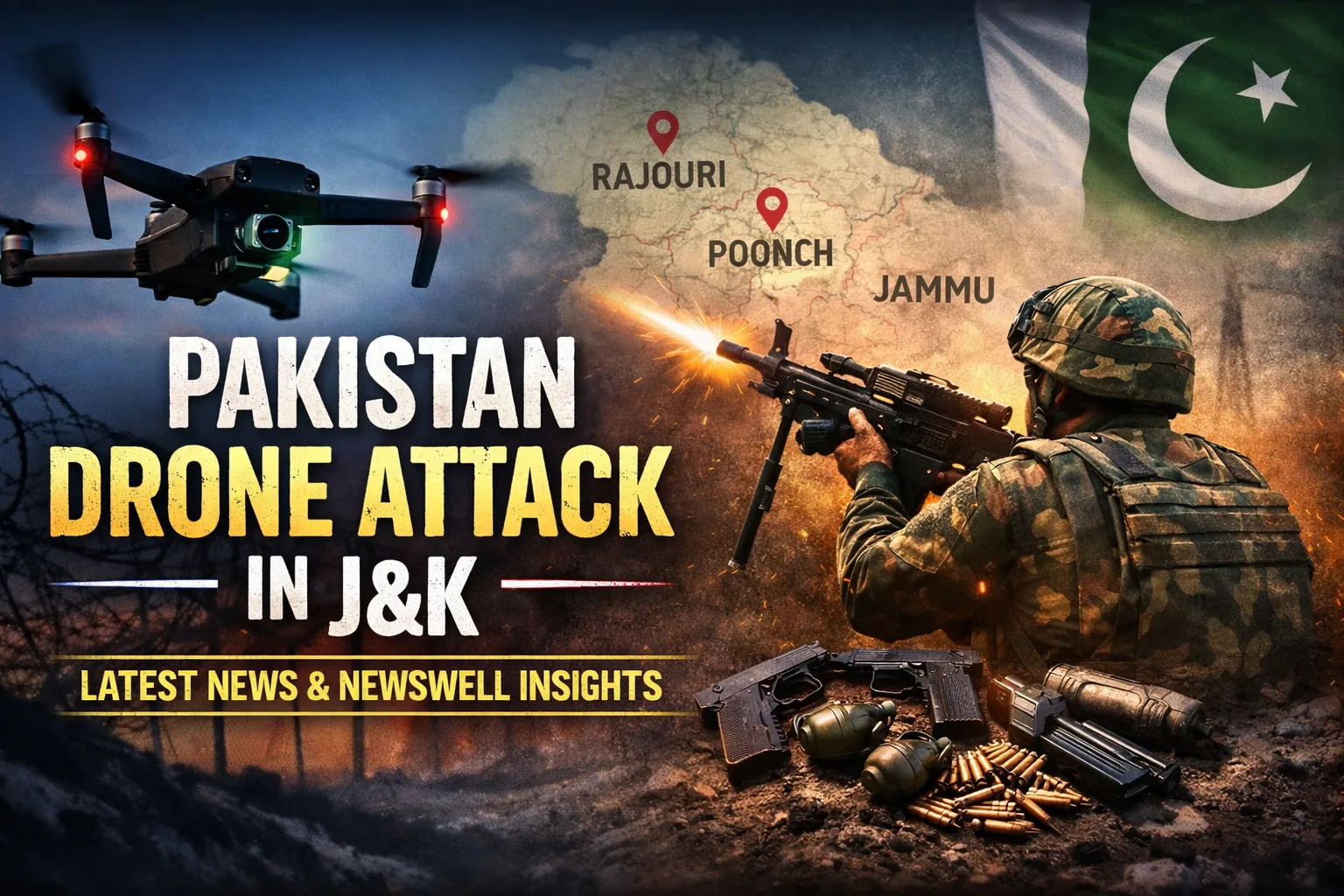
On Sunday evening, January 11, 2026, Indian security forces reported multiple sightings and engagements of suspected drones originating from Pakistan near the Line of Control (LOC) and the International Border (IB) in Jammu and Kashmir. These incidents occurred in several forward sectors including Samba, Rajouri and Poonch, prompting alert, search operations and increased military activation.
In at least one confirmed encounter, Indian forces fired on a suspected Pakistani drone in the Nowshera sector, engaging the unmanned aircraft with machine guns. Security teams began ground searches to determine whether weapons or contraband were dropped by drones.
A few minutes later, similar drone-like objects were seen near Khabar village (Rajouri), Chak Babral (Samba) and Mankote (Poonch) – all confirmed by official sources.
Additional reporting also noted five or more suspicious drone sightings in a single evening, a sharp increase compared to earlier periods when such incidents were more sporadic.
What happened? Latest confirmed incidents
1. Drone vision and activities
Several drones were seen patrolling forward areas along the LoC and IB, briefly crossing into Indian territory before retreating.
Security forces opened fire, forcing at least one drone to flee.
Search operations were launched in all affected districts to check for dropped weapons or other materials of concern.
2. Weapons Consignment Drop (Early Night)
A related but separate operation heightened the threat: a cache of arms and ammunition, believed to have been dropped by a Pakistani-origin drone, was recovered in a village in Samba district, including a pistol, magazines, rounds and a grenade.
This confirms that drone activity is not limited to surveillance alone – it could be part of repeated attempts to smuggle weapons and contraband into Indian territory.
NewsWell Insights – What it really means
Beyond the raw reports, the strategic implications and underlying dynamics suggest deeper currents shaping the security environment. These insights combine verified facts with the informed analysis often seen in newsworthy editorial structures.
📍 1. Drone threats are increasing – not accidental
While drones have been spotted from time to time over these borders in recent years, the frequency and cluster of sightings in one evening is unusual. Five suspected drones in the same incident suggest either:
- a coordinated reconnaissance effort, or
- A deliberate attempt to probe Indian security and censorship coverage.
- Either explanation points to increasing sophistication and intent, not isolated incidents.
📍 2. Cross-border smuggling is a real risk
The recovery of a drone-dropped weapons cache in Samba – confirmed by multiple outlets – is significant:
- This indicates that these UAVs are not being used just for aerial surveillance, but for physical distribution.
- This pattern mimics previous attempts to smuggle small arms and explosives across the LoC via drones.
- India’s security agencies are unlikely to downplay it; Repeated weapons drops may facilitate terrorist infiltration or local terrorist operations.
- This increases the risk from intelligence gathering to operational support for hostile elements.
📍 3. Operational readiness is being tested
The response of Indian forces – firing on drones, launching ground searches and raising alert – shows:
- increased real-time detection capabilities, and
- Preparation for quick response at advance locations.
- But frequent infiltrations also test the patience of frontline units and, if they become routine, can put a strain on resource priorities.
📍 4. Border dynamics are unstable, ceasefire still fragile
Although the ceasefire is technically effective, incidents like this highlight the weaknesses. The first round of drone crossings and weapons drops occurred following India’s Operation Sindoor in 2025, but the current situation shows that peace can quickly slide back into activity without strong enforcement mechanisms.
This dynamic highlights an important Newswell insight:
A ceasefire is only as strong as mutual enforcement – and unapproved actions by non-state representatives can destroy the peace even without official tensions.
📍 5. Psychological and civic impacts are under-reported
- For villagers near the border, repeated drone sightings and military responses:
- disrupt daily life, and
- Concern has increased among communities already alert about cross-border tensions.
- These impacts are not always flagged in mainstream reports, but are central to understanding long-term sustainability challenges.
📍 6. The broader regional context matters
The India–Pakistan border remains one of the most militarized borders in the world. Moments of increased activity – including drone operations – must be viewed in the larger geopolitical context:
- Historical ceasefire agreements have often been fragile due to local flare-ups.
- Previous major tensions involved drones, missiles and artillery before de-escalation.
- So frequent drone intrusions may be both a symptom and a cause
What are the officials saying?
So far, official statements from Indian defense channels confirm this:
- Multiple drone detection,
- military involvement where necessary,
- No major casualties or large-scale attacks have been reported, and
- Search operations are underway to assess whether any object has been dropped on Indian soil.
Officials have not confirmed whether diplomatic channels have been imposed on these specific navigations, but past patterns suggest that incidents of this nature are often logged through military channels before reaching higher diplomatic levels.
Strategic signals: What can India do next
- Advanced anti-drone measures
- Looking at frequency and evolving patterns:
- Counter-UAV systems can be deployed in more forward areas.
- Radar and optical surveillance are likely to be upgraded.
Integration of air defense with ground units will be given priority.
Joint military and civilian alert
Civil administration in border districts may extend warnings and advisories to villagers to report unusual aerial objects.
Diplomatic message
If drone infiltration continues, New Delhi may highlight it in international forums:
- cross border security risks,
- alleged violations of ceasefire norms, and
- The role of UAVs as destabilizing tools.
Conclusion – A complex, evolving threat
The latest Pakistani drone activity in Jammu and Kashmir reflects more than just what was seen on an isolated border. It shows:
- Possible changes in strategy involving drones for both surveillance and material delivery,
- Increased operational stress on Indian security apparatus,
- a fragile ceasefire that remains vulnerable to technological provocations, and
- Broader strategic implications for India-Pakistan relations.
Incorporating both verified facts and analytical insights – the essence of the Newswell perspective – shows that this is not simply a security lapse, but part of an ongoing evolution in border conflict dynamics. Continued vigilance, layered defense strategies and diplomatic engagement will be necessary if tensions are to be avoided.