
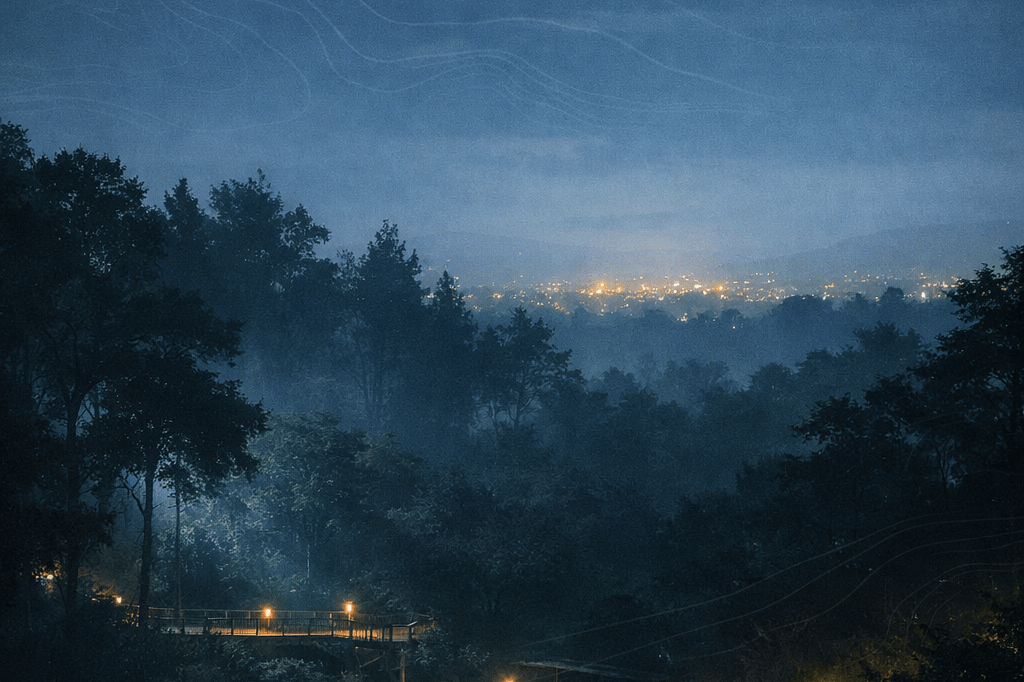
Lucknow is preparing to enter uncharted territory in India’s urban development and conservation journey. The Uttar Pradesh government’s plan to develop India’s first urban night safari in Kukrail forest is being considered more than a tourism initiative. Officials describe it as an experiment in how a growing Indian city can co-exist with wildlife, conservation goals and public access without marginalizing nature.
On the surface, the announcement seems straightforward: a night safari within an urban forest area. But when examined closely, the proposal reflects a deeper shift in how Indian states are rethinking land use, tourism economics and ecological responsibility within city limits.
This Newswell Insight explains what the Kukrail Night Safari is, why it matters now, and what it could mean for other Indian cities if executed carefully.
What is being planned in Kukrail Forest?
Kukrail Forest, located on the outskirts of Lucknow, has long been recognized as an ecologically sensitive green area rather than a traditional tourist destination. The proposed night safari will introduce controlled, guided night wildlife viewing within a defined area of this forest – a model that is very different from traditional safaris located inside protected reserves.
Unlike national parks or tiger reserves, this project is designed to work in an urban context. That distinction is important. The safari is expected to operate under strict regulation, with limited visitor numbers, designated routes and lighting that will minimize disturbance to the wildlife.
According to planning documents and preliminary briefings, the emphasis is on a non-intrusive experience – allowing people to observe the behavior of nocturnal animals while maintaining ecological balance.
Why Urban Night Safari – and why now?
India’s cities are expanding rapidly, often at the expense of green spaces. At the same time, domestic tourism is changing. Urban residents are increasingly looking for curated, short-term experiences that do not require long-distance travel.
The Kukrail project lies at the intersection of these trends.
- From a policy perspective, this reflects three emerging priorities:
- Conservation within city limits, not just in remote sanctuaries
- Tourism diversification beyond monuments and day attractions
- Public engagement with ecology, especially among young, urban populations
Rather than push wildlife experiences away from cities, the government is testing whether conservation awareness can be incorporated directly into urban life.
What makes this project different from traditional safaris?
Traditional Indian safaris generally share three characteristics: they are located away from cities, operate primarily during daytime hours, and are located entirely within protected forest reserves.
Kukrail Night Safari challenges all three notions.
First, its urban proximity changes the economics. Shorter trips, evening slots and city-based transport access could broaden participation beyond high-spending tourists.
Second, the nighttime focus highlights nocturnal species and behaviors rarely seen in standard wildlife tourism.
Third, the project is being designed as a managed ecological installation and not an adventure park. This difference will determine whether conservationists ultimately support or oppose the initiative.
If successful, it could become a blueprint for similar projects in other fast-growing Indian cities.
Conservation vs. Commercialization: The Central Tension
Any wildlife project within a city raises legitimate concerns. Conservation experts have repeatedly warned that tourism-led initiatives risk prioritizing tourist numbers over ecological health.
The long-term reliability of the Kukrail Safari will depend on how well officials address four key issues:
- Light pollution and its effects on nocturnal species
- Noise control, especially during peak visitor hours
- Habitat fragmentation due to infrastructure development
- Visitor capacity limits and enforcement mechanisms
Early signs suggest planners are aware of these risks. The use of reduced intensity, directed lighting and restricted routes have been mentioned as mitigation strategies. However, implementation – not intention – will dictate the outcome.
Urban ecology as policy, not just environment
What makes the Kukrail Night Safari politically and strategically important is that it redefines ecology not just as environmental protection, but as urban policy.
Indian cities often treat forests as buffers waiting to be transformed. This project signals a different approach: using ecological assets as long-term civic infrastructure.
If successful, it could encourage state governments to invest in:
- Protected Urban Green Area
- Environment-Sensitive Planning Framework
- conservation related employment
- Educational tourism for schools and universities
In this sense, this project is as much about governance innovation as it is about wildlife.
Economic and tourism implications for Lucknow
Lucknow already has a strong cultural and historical identity from the tourism point of view. An urban night safari adds an entirely new arena to what the city has to offer.
Lucknow already has a strong cultural and historical identity from the tourism point of view. An urban night safari adds an entirely new arena to what the city has to offer.
- Potential benefits include:
- extended tourist stay period
- increase in evening economy
- Employment in conservation, guidance and maintenance
- To establish Lucknow as a model city for sustainable tourism
However, these benefits will only be realized if safaris avoid becoming a novelty-driven attraction divorced from conservation goals.
What happens next?
Currently, the project is in its planning and proposal stage. Environmental clearance, detailed ecological impact assessment and operational guidelines will determine its final shape.
Public scrutiny – from conservation groups, urban planners and residents – will also play a role. Unlike remote wildlife projects, an urban safari operates under constant public visibility.
That visibility may be its greatest strength – or its greatest vulnerability.
NewsWell Insight: Why this project matters beyond Lucknow
Kukrail Night Safari is not just about Lucknow. This represents a broader question that Indian cities will increasingly face: can development, conservation and public access co-exist in dense urban spaces?
If handled responsibly, this project could redefine how India thinks about wildlife in cities – not as a hindrance to development, but as an integral part of it.
If mishandled, it risks becoming a cautionary tale.
Either way, the outcome will be closely monitored.
Frequently Asked Questions
An urban night safari is a controlled wildlife experience conducted at night within or near a city, designed to observe nocturnal animals while minimizing ecological disruption.
It has been planned in Kukrail Forest on the outskirts of Lucknow, Uttar Pradesh.
The effect depends on execution. Strict lighting controls, limited visitor numbers and habitat conservation are necessary to prevent loss.
Unlike zoos, animals are not confined to exhibits. Unlike safari parks, the focus is on minimal infrastructure and guided observation within the existing forest area.
No official opening date has been announced yet. The project is currently in the planning and approval stage.