
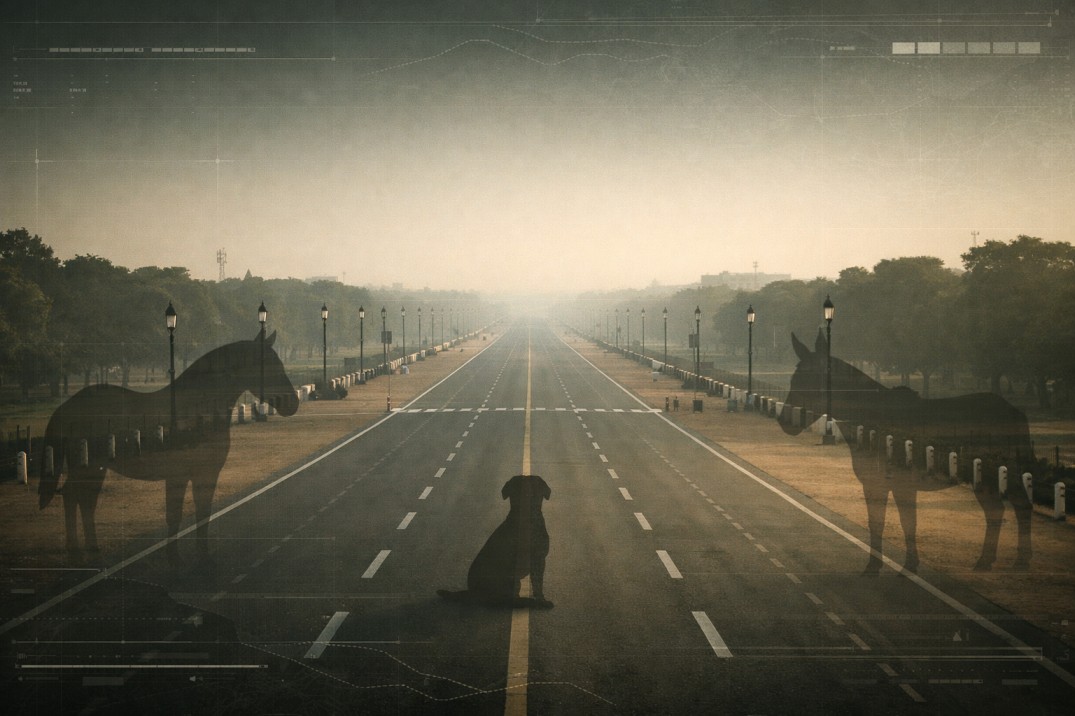
For decades, India’s Republic Day parade has been a carefully crafted display of military capability, discipline and national identity. From marching troops to advanced weapon systems, each element is chosen to reflect the evolving priorities of the country’s defense forces.
In 2026, the parade will mark a quiet but historic change.
For the first time, animal soldiers of the Indian Army will formally march on the duty path during the Republic Day Parade – an inclusion that goes far beyond symbolism.
This decision represented official recognition of animal units as operational assets, acknowledging roles that had long remained in the background of military narratives.
A historic first in the history of Republic Day Parade
Animal soldiers have been a part of the Indian Army since its early years, supporting logistics, patrolling, rescue operations and mobility in difficult terrain. Yet, despite decades of service, they have never been formally represented at India’s most notable national military function.
Republic Day 2026 brings a change in that.
Marks of his participation:
- First included in the parade lineup
- Formal recognition of their operational contribution
- Shift towards a more inclusive and realistic portrayal of military capability
This is not a formal gesture. This is a statement.
Who are the animal soldiers of the Indian Army?
Animal soldiers are trained and deployed in many operational environments where machines and vehicles often fail. These units are not mascots or symbolic companions – they are trained service assets, integrated into active operations.
- Major Animal Units in the Indian Army
- Mules and horses for logistics in hilly and high altitude areas
- Dogs for patrol, detection, search-and-rescue and security roles
His training includes:
- Obedience and task-specific conditioning
- Adaptation to extreme climates
- Operational integration with infantry and support units
In areas like Ladakh, Siachen and dense forest areas, animal units are irreplaceable.
Why do animal units still matter in modern warfare?
In an era dominated by drones, satellites and mechanized forces, the relevance of animal soldiers may seem outdated at first glance. In reality, the opposite is true.
operating profit
- mobility where vehicles cannot operate
- silent movement in sensitive areas
- Lower logistics footprint compared to mechanized alternatives
- Reliability in extreme weather conditions
Modern warfare increasingly demands flexibility – and animal units provide exactly that.
Why does his inclusion in the parade matter?
The Republic Day Parade is not just a celebration. It is a strategic communication platform.
Including animal soldiers, the Indian Army is:
- Publicly acknowledging non-mechanized abilities
- Strengthening the value of traditional operating assets
- Presenting a more accurate picture of how actual military operations work
This inclusion also sends a message internally – that service, in whatever form, is recognized.
The Kartavya Path : A Symbolic Step to Identity
Walking on the path of duty has deep institutional meaning. Earlier known as Rajpath, the avenue was renamed to reflect duty, service and responsibility.
Deploying animal soldiers on this path:
- Aligned with the idea of duty beyond visibility
- Often overlooked contributors to national defense are elevated
- Reinforces the Army’s ethos of collective service
- The march will not be a farce. This will be recognition.
Republic Day 2026: A sea change in military messaging
The decision also reflects a broader change in the way the Indian Army interacts with the public.
Rather than focusing solely on hardware and firepower, recent parades have highlighted the following:
- Human and institutional elements
- Operational readiness in all areas
- Variety of military roles
The inclusion of animal soldiers fits seamlessly into this evolving narrative.
Not symbolism – strategy
It is important to understand what this inclusion is not:
- This is not a formal symbolism
- This is not a public relations move
- This is not nostalgia
It is an operational acceptance embedded in a national function.
That distinction matters.
What does this indicate going forward
The 2026 Republic Day parade could set a precedent for:
- Better visibility for support units
- Recognition of non-combat operational roles
- More nuanced representation of military power
This reinforces a simple but powerful truth: modern defense is not just about technology – it is about adaptability.
Conclusion
The inclusion of animal soldiers in the Republic Day Parade 2026 is a historic first, but more importantly, it is meaningful.
Continuing on the path of duty, these units will finally be recognized nationally for decades of service – not as symbols, but as operational contributors.
In doing so, the Indian Army is expanding the definition of what military power looks like in the modern era.
Newswell Insights
The inclusion of animal soldiers in the Republic Day Parade 2026 is more than a formality.
This signals a shift in how the Indian Army presents military power – moving beyond weapons and hardware to recognizing the operational ecosystem that includes logistics, terrain and support units.
By bringing animal soldiers on the line of duty, the army is:
Accepting actual operating contribution
Reinforcing that service matters, even away from the front lines
Shows that modern defense is mixed – not just technological
This is not symbolism.
This is institutional recognition.
Frequently Asked Questions (FAQs)
Animal soldiers are being inducted within the Indian Army to formally recognize their operational role in logistics, patrolling, rescue and high altitude missions.
The Indian Army primarily deploys dogs, horses and mules for operational support in various terrains and missions.
Yes. For the first time in Republic Day 2026, animal soldiers will formally march on the duty path during the Republic Day Parade.
Yes. Animal units provide mobility, quietness and reliability in areas where vehicles and machines cannot operate effectively.
No, animal soldiers complement rather than replace modern military technology, especially in extreme and inaccessible areas.