
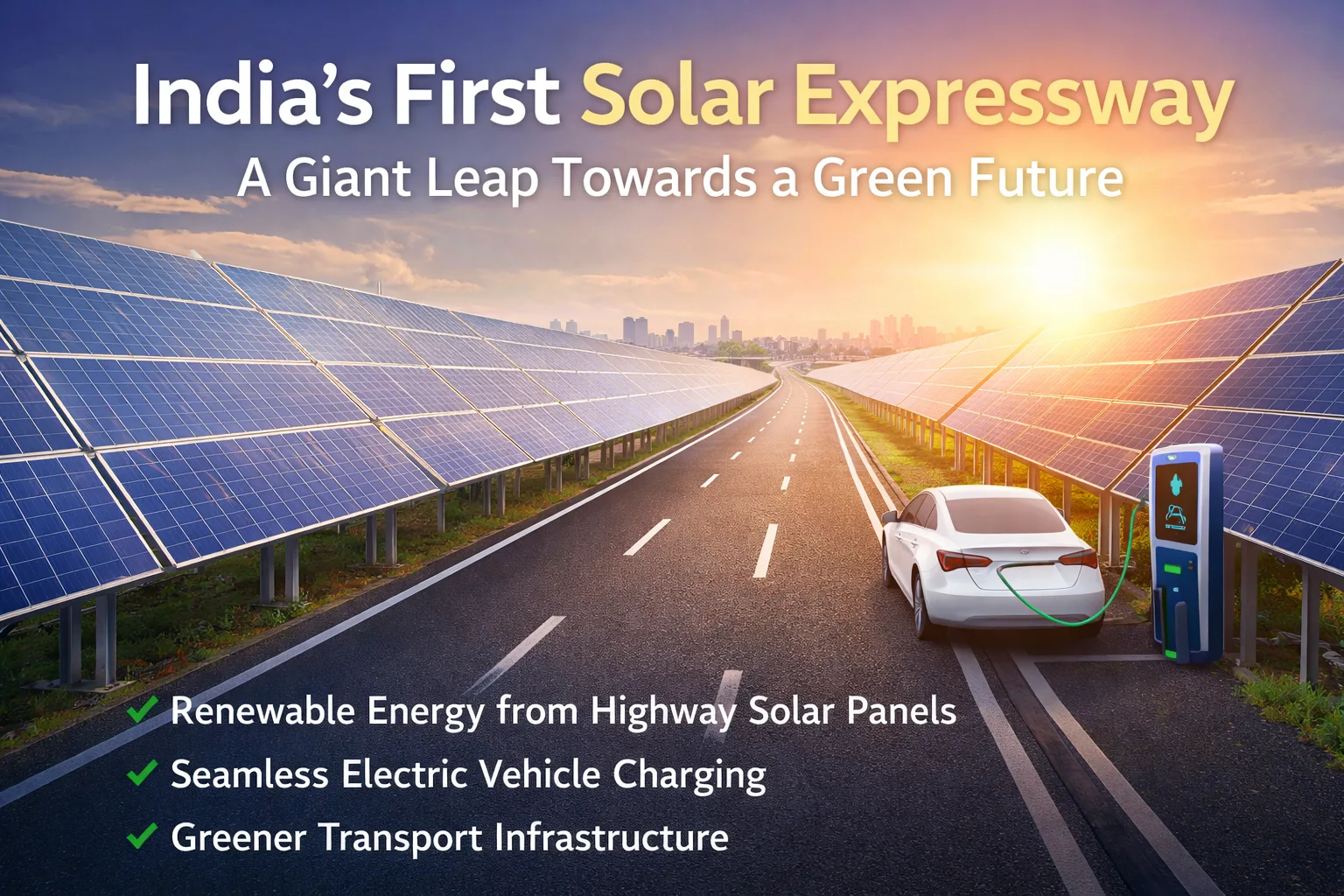
India is no longer just talking about sustainable development – it is building it. With the announcement and development of the country’s first Solar Expressway, India has taken a historic step towards linking infrastructure development with renewable energy innovation. This bold move is being seen globally as a model for future highways powered by the sun.
As highlighted in recent viral reels and discussions, including India Solar Expressway 2026, the idea of generating power directly from highways is no longer science fiction. This is becoming a reality – and India is leading the charge.
What is India’s Solar Expressway?
Solar Expressway is a modern highway project where solar panels are installed along or above road infrastructure to generate clean electricity. Instead of wasting unused roadside space, this project converts highways into power-producing assets.
The electricity generated can be used for:
- highway lighting
- transportation system
- EV charging station
- Nearby villages and urban areas
This innovative model not only reduces carbon emissions but also reduces long-term infrastructure costs.
Why is this a game-changer for India?
India is one of the fastest growing economies in the world, and with that growth comes the demand for energy. Traditionally, road transport and infrastructure development has been heavily dependent on fossil fuels. The Solar Expressway changes that equation completely.
Main Benefits:
✅ Clean, renewable energy production
✅ Less dependence on petrol and diesel
✅ Low carbon footprint
✅ Cost-efficient infrastructure in the long run
✅ Boost India’s green energy goals
The project reflects India’s vision of balancing development with environmental responsibility.
“Electricity from Sun, Progress from Roads”
The phrase widely used online – “Power from sunshine and progress from roads” – perfectly captures the spirit of this initiative.
Highways, once a symbol of fuel consumption and pollution, are now being transformed into sources of renewable energy. This change sends a strong message: development must not come at the expense of nature.
How does the Solar Expressway work?
The system uses high-efficiency solar photovoltaic panels installed:
- on sound barriers
- on overhead structures
- in areas along or between highways
These panels absorb sunlight and convert it into electricity, which is then fed into the grid or used locally. Smart monitoring systems ensure efficiency, safety and uninterrupted power supply.
This integration of infrastructure development and solar energy is what makes this project revolutionary.
Promotion of electric vehicles (EV)
One of the most exciting aspects of the Solar Expressway is its ability to support electric vehicles.
With electricity generated from solar energy:
- EV charging stations can be installed along highways
- Long distance electric travel becomes practical
- Dependence on fossil fuels is significantly reduced
Many experts believe that this could be the beginning of an electric mobility revolution in India.
Gujarat is leading
Gujarat has emerged as a leader in renewable energy initiatives, and it is no surprise that solar power Gujarat projects are attracting national and international attention.
The state’s proactive policies, solar parks and infrastructure planning make it an ideal testing ground for such future highways. If successful, this model can be replicated in other states like Rajasthan, Maharashtra and Tamil Nadu.
Global focus and strategic impact
Other countries are keeping a close eye on India’s Solar Expressway initiative. Nations struggling to balance infrastructure development with climate commitments are now looking to India for inspiration.
This project strengthens India’s position as:
- A global renewable energy leader
- Climate conscious developing economy
- Center for Green Technology Innovation
From a geopolitical and economic perspective, clean energy infrastructure enhances India’s long-term energy security.
Challenges Ahead
Although the vision is ambitious, challenges remain:
- high initial investment cost
- maintenance of solar panels
- Weather related efficiency differences
- Integration with existing grid systems
However, experts agree that the long-term benefits outweigh the short-term hurdles, especially as solar technology has become cheaper and more efficient.
Public reaction: About pride or timing?
Reactions online have been mixed but emotional. Many users feel proud that India is a leader in such innovation, while others say it is time for the country to adopt renewables-first infrastructure.
Either way, the conversation itself reflects a growing public awareness of sustainability – a key factor for long-term success.
What does this mean for the future of India
The Solar Expressway is more than just a road – it is a symbol of India’s future:
- cleaner
- smart
- self-sufficient
- technologically advanced
If scaled nationwide, such projects could dramatically reduce emissions, create green jobs, and redefine how infrastructure is built in developing countries.
Conclusion
India’s first solar expressway represents a bold leap into the future of green highways and renewable energy-powered infrastructure. By turning sunlight into electricity and roads into power sources, India is proving that innovation and sustainability can go hand in hand.
As the world watches, this initiative could become a blueprint for countries that aim to build smarter, cleaner and more resilient infrastructure. One thing is certain – India is not only moving towards the future; It’s helping to design it.
Unique FAQs
Unlike traditional highways, the Solar Expressway generates renewable electricity using solar panels installed along the road infrastructure, turning transport corridors into power-producing assets.
Yes. By supporting electric vehicle charging stations and powering highway systems, solar expressways reduce reliance on petrol and diesel over time.
Modern solar panels are designed to function even in low-light conditions, and energy storage systems help maintain a stable power supply during non-sunny hours.
The Solar Expressway aligns with India’s net-zero and renewable energy targets by cutting emissions, promoting clean energy, and reducing fossil fuel usage in infrastructure.
Gujarat is currently leading the initiative due to its strong renewable energy ecosystem and progressive infrastructure policies.