
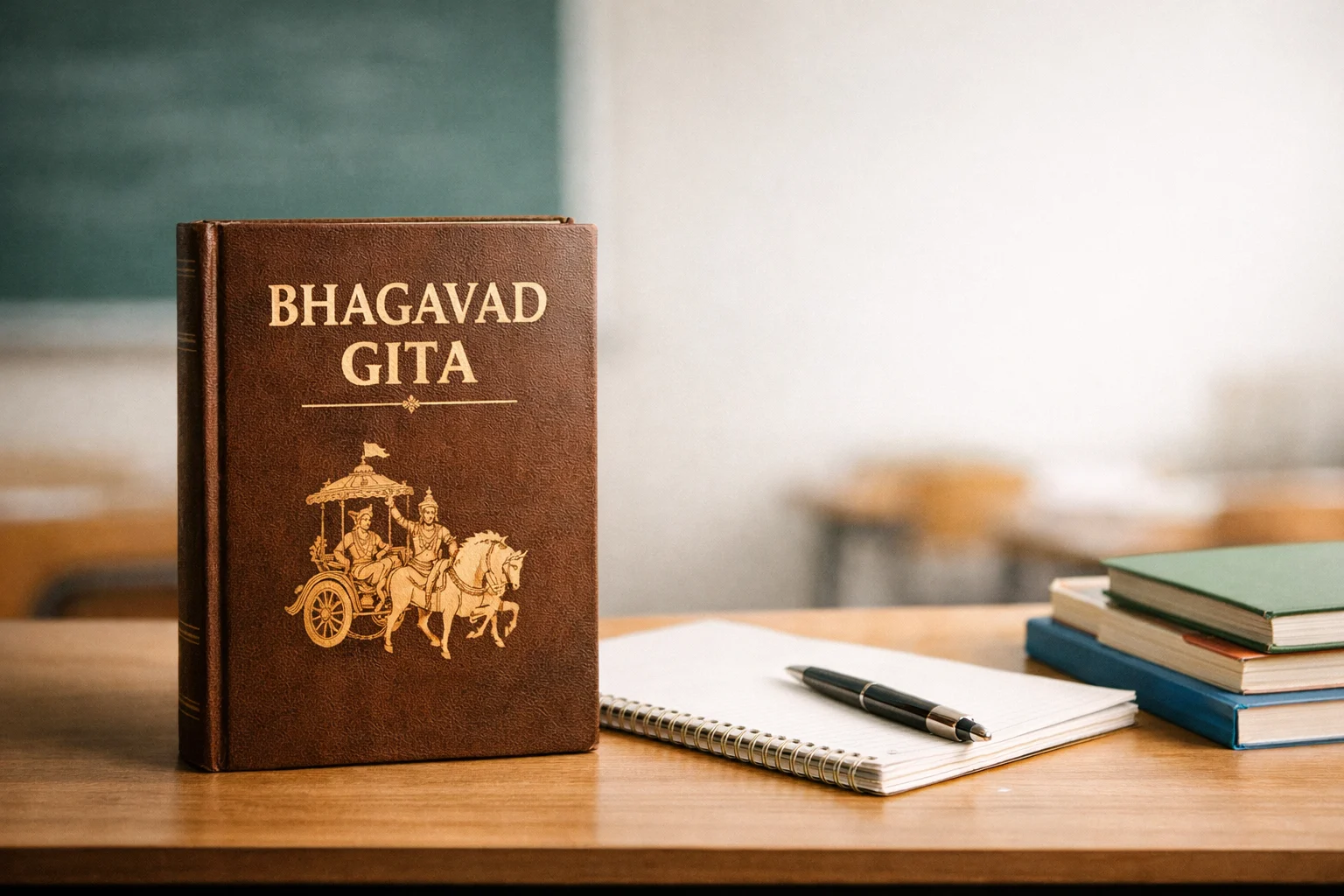
India’s education system is once again at the center of national discussion, as a proposal to introduce Bhagavad Gita as a separate subject for students from classes 6 to 10 is gaining attention. The idea is not about religious education, but about taking structured lessons from one of India’s most influential philosophical texts to support value-based education.
At Newswell, we see this proposal as part of a larger shift in education – one that aims to balance academic performance with character, ethics and life skills. As the proposal is still under discussion, it has sparked important conversations about how young minds can be better prepared for real-world challenges.
Understanding the proposal
The proposal suggests introducing the Bhagavad Gita in schools as a structured subject, rather than as informal reading or optional material. The focus would be on age-appropriate lessons related to duty, decision-making, self-control, responsibility, and ethical thinking.
Importantly, this initiative is being discussed in the context of education reform, not religious promotion. The intention is to present the text as a source of philosophical and moral education, just as global education systems incorporate classical texts or moral studies to produce well-rounded individuals.
Why does value-based education matter today?
Modern education often emphasizes marks, rankings and competitive examinations. Although academic excellence is important, it alone does not prepare students for complex social, emotional, and ethical situations.
Newswell believes that values-based education plays a vital role in addressing many of the challenges facing today’s youth:
- Increased academic stress
- Confusion in decision making
- Lack of emotional flexibility
- Weak moral foundation in professional and personal life
Introducing structured moral education at the school level can help students develop clarity, balance and confidence along with academic knowledge.
NewsWell Insights: Key Benefits for Youth Development
From Newswell’s perspective, the proposed subject can support the all-round development of young learners in a number of important ways.
1. Strong moral foundation at an early age
Students between classes 6 to 10 are in the preparatory stage. Lessons on duty, responsibility and consequences can help shape their value system well into adulthood.
2. Better decision making skills
Many of the concepts discussed in the Bhagavad Gita revolve around choice, action, and accountability. When taught in a modern, relevant way, these ideas can help students think more clearly before making decisions in academics, relationships, and future careers.
3. Emotional stability and stress management
School life today comes with pressure – exams, expectations and competition. Lessons that encourage balance, self-awareness, and meditation can help students manage stress more effectively.
4. Holistic development beyond exams
Education should prepare students not just for examinations but for life. Ethical discussion, self-reflection, and values-based learning can contribute to personal development that goes beyond grades and certificates.
5. Responsible Citizenship
By learning about duty, discipline, and ethical conduct, students can become more responsible citizens who understand the impact of their actions on society.
How does it fit into India’s education vision?
Globally, many education systems integrate philosophy, ethics and civics studies into their curriculum. India’s discussion around the Bhagavad Gita reflects an attempt to combine modern education with timeless wisdom.
Newswell sees this proposal as part of a broader effort:
- reduce cramming
- encourage critical thinking
- build emotional intelligence
- strengthen social responsibility
If implemented thoughtfully, such a subject could complement science, mathematics and language studies, rather than compete with them.
Addressing Common Concerns
Like any education reform, questions have been raised on this proposal too. Some parents and teachers have asked whether this could lead to increased academic load or blur the line between education and faith.
These concerns highlight why implementation matters more than intent. Any course based on the Bhagavad Gita will require the following:
- Clear educational objectives
- Neutral, inclusive language
- Age-appropriate content
- Trained teacher
- Focus on morality, not ideology
Newswell believes that transparency and academic profiling will be key to ensuring acceptance and effectiveness.
The Way forward
As of now, the proposal is under discussion, and no final framework or implementation timeline has been announced. Education experts, policy makers, parents and teachers are expected to play a role in shaping how – or if – the subject becomes part of the curriculum.
What is clear, however, is that the conversations themselves reflect a growing awareness that education must evolve with the needs of society.
Conclusion
The idea of introducing the Bhagavad Gita as a school subject represents more than a change in the curriculum – it reflects a deeper question about what education should achieve. From NewsWell’s perspective, any effort that encourages ethical thinking, emotional balance, and responsible decision-making among youth deserves careful consideration.
If implemented with clarity, inclusivity and academic discipline, this proposal can make a meaningful contribution to the overall development of India’s future generations.
FAQ
No, as of now, the proposal is under discussion, and no final decision regarding mandatory implementation has been announced.
The proposed focus is on values, ethics and philosophy, not religious practice or belief.
Currently, classes 6 to 10 are mentioned in the discussion.
It can support better decision making, stress management and ethical awareness in daily life.
There is no fixed deadline yet. Officials are still reviewing and discussing the proposal.