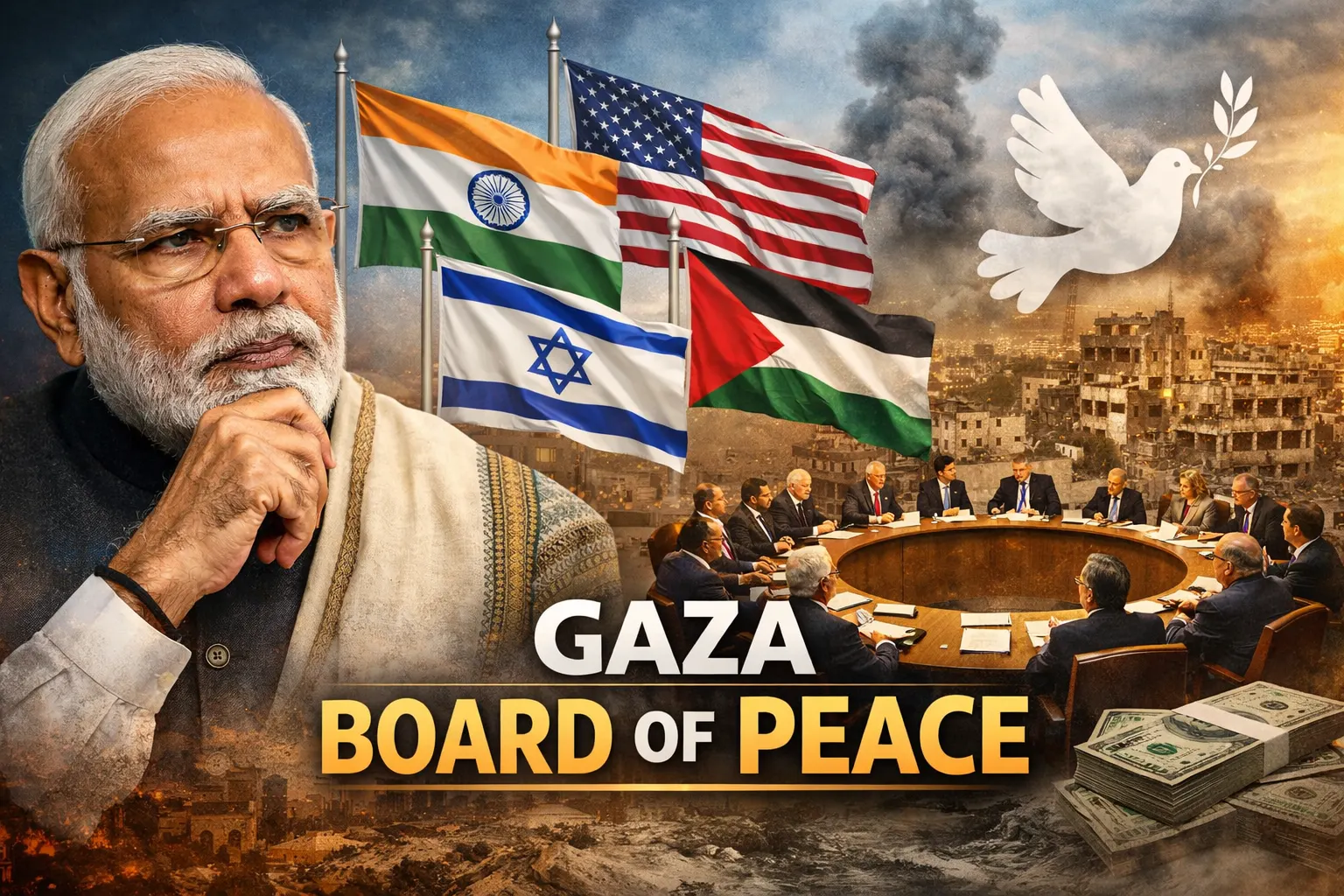
The United States has invited India to join (at least initially) a proposed international “peace board” focused on Gaza – an initiative linked to US President Donald Trump’s push for a structured post-conflict plan that includes reconstruction and governance frameworks, reports said. The invitation was shared publicly by the US Ambassador to India, and India has yet to officially confirm participation.
For India, this is not just another diplomatic invitation – it is a high-visibility geopolitical seat that could reshape how New Delhi is viewed in West Asian crisis management, while also raising tough questions about neutrality, risk and strategic payoffs.
What exactly is the “peace board” for Gaza?
According to reporting, the “Peace Board” is presented as a multinational mechanism to oversee elements of the stabilization and reconstruction of Gaza after the conflict. The initiative reportedly consists of several layers – such as a main board and a more operational or executive component – designed to coordinate security-related steps involving governance, reconstruction funding and a phased ceasefire plan.
One fascinating detail: The Associated Press reports that a $1 billion contribution could secure a permanent seat, while other appointments could be time-bound (for example, three years). That funding has been described as going towards the reconstruction of Gaza.
The White House has indicated that invitations have gone out to multiple countries, and reports mention multiple invitees across sectors – meaning India will be joining a crowded room where influence depends on clarity of mandate, leverage and credibility.
Why India? Strategic logic behind the invitation
India is in a rare diplomatic situation:
- It has historically supported the Palestinian cause as well as maintained strong strategic ties with Israel for over a decade.
- It has growing partnerships across the Gulf, where regional powers are critical to any Gaza outcome.
- It has global credibility as a “balancing” power – often considered pragmatic rather than ideologically interventionist.
This combination could make India attractive to a board that seeks legitimacy beyond the usual Western or regional blocs.
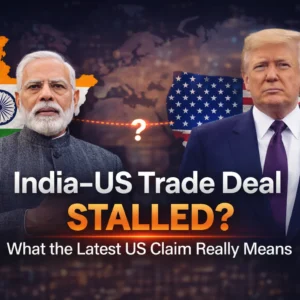
But there’s another side to it: The invitation comes amid reports of US-India trade friction, which includes mention of higher tariffs and a stalled trade arrangement. That context matters because diplomacy and economics often go together.
What benefit can India get by joining this?
1) A strong “Global South peacemaker” identity
A formal seat on the high-profile Gaza framework (even if controversial) could boost India’s position not just as a commentator, but as a problem-solver. This plays well with India’s broader effort to be seen as a leading voice for developing countries.
2) Real impact on aid+reconstruction rules
If the Board truly coordinates funding flows, reconstruction priorities and governance support at the grassroots level, India can insist on:
- transparent human corridors,
- Tech-Enabled Help Tracking,
- Safety measures for citizens,
- Accountability mechanisms on reconstruction contracts.
This is where the impact becomes tangible, not symbolic.
3) Regional diplomacy upside down
Millions of Indian citizens work in the Gulf and have a strong energy interest in the region. Being inside a stable mechanism can indirectly help India protect those long-term regional interests – if the board is credible and sustainable.
India must assess major risks
1) Reputation risk: being seen as taking sides
Gaza is one of the most emotional conflicts in the world. Even a neutral, reconstruction-focused role may be characterized as “supporting” one side’s political outcomes. If the board’s mandate includes controversial issues such as governance structure, disarmament, or security controls, India could be dragged into political battles that are not its own.
2) Unclear mandate = Unclear exit
If roles are not clearly defined, participation may be open-ended. India has traditionally avoided getting caught up in arrangements where:
- goals are unclear,
- The timeline slips,
- Accountability is political,
The outcomes depend on actors India cannot control.
3) Board vs. existing global framework
AP reporting suggests that the initiative could be seen as parallel to or challenging existing multilateral structures. If that friction increases, India may face awkward diplomatic choices between competing “centres of legitimacy”.
4) “Pay-to-Stay” Optics
If the permanent seat mechanism is linked to a large financial contribution, this creates optics problems: Is influence being bought? Even if the money goes to reconstruction, the structure may be criticized as transactional.
NewsWell Insights: What to watch next (signals that matter)
Here are the behavioral signals NewsWell will track to understand whether this story becomes a major turning point – or fades as a headline:
Signal 1: Vocabulary from India (yes/no only)
If India responds, check out the exact language:
- “Humanitarian support” language = safe, narrow scope.
- “Governance and security” language = deep involvement, high risk.
- “Consultation ongoing” = possible delay until mandate is clarified.
Signal 2: Who sits at the executive level
The real power often resides in the small “executive” group that sets the framework and controls the levers. If that layer weighs heavily on US/ally figures, India’s role may be more symbolic. If balanced with regional and neutral powers, India’s influence can be meaningful.
Signal 3: Israel’s response and claims of coordination
If key stakeholders publicly criticize the lack of coordination (as has been reported), this signals operational turmoil from day one – which could reduce the board’s effectiveness and increase reputational risk for participants.
Signal 4: Subscription List and Terms
When the final list is declared, watch:
- Which Gulf states participate,
- Will the major European powers join in,
- Do regional rivals sit together,
- And whether membership terms vary by country.
What India is likely to do (reasonable expectation)
Based on India’s historical patterns, the most likely route – if it is involved at all – would be:
- Participate in limited, humanitarian/reconstruction capacity,
- Avoid security enforcement responsibilities,
- Insist on clarity around mandate and neutrality,
- Keep the diplomatic room open with all stakeholders.
That said, there is a genuine debate within India’s strategic community over whether New Delhi should accept such roles or avoid getting involved in complex Arab-Israeli politics.
FAQ
As per latest reports, India has not officially confirmed acceptance or participation.
Reporting describes it as an initiative aimed at supporting the Gaza ceasefire framework and shaping post-war governance and reconstruction mechanisms.
A $1 billion contribution could secure a permanent seat, while other memberships may be time-limited, the AP reported.
India’s ties with Israel, historical support for Palestine and growing role in global diplomacy make it a politically useful partner for the multinational framework.
To be perceived as taking sides – or to be locked into a vague mandate that becomes politically costly.