The first-ever concept of a proposed BRICS currency has gone viral on social media platforms in recent days, sparking a global debate on de-dollarization, financial sovereignty and the future of the global monetary system. While officials from the BRICS countries have clarified that no physical currency has been officially launched yet, the idea has attracted global attention – and with good reason.
This article explains what the BRICS currency is, why it is being discussed now, its potential global impact and why the United States is watching closely – with in-depth newsworthy insight that goes beyond the headlines.
What is BRICS currency?
BRICS currency refers to a proposed common settlement or reserve currency mechanism being explored by the BRICS bloc—Brazil, Russia, India, China, South Africa and recently expanded members including Saudi Arabia, the United Arab Emirates, Iran, Egypt and Ethiopia.
Rather than immediately swapping national currencies, the idea focuses on:
- a common trade settlement unit
- Dependence on US dollar reduced
- Cross-border payments using local currencies or digital infrastructure
- A possible commodity-backed or basket-based valuation model
Unlike the euro, it is not designed to be a consumer currency, at least in the early stages. Instead, it targets inter-governmental trade, energy transactions and financial settlements.
Why is BRICS talking about currency now?
1. Weaponization of the dollar
Sanctions imposed by the US and its allies, particularly Russia, have heightened global concerns over dollar dependence. Countries now view excessive dependence on the US dollar not just as an economic option but as a geopolitical risk.
2. Increase in South-South trade
Account of BRICS countries:
- more than 40% of the global population
- About 30% of global GDP (PPP)
- Increasing share of energy, commodities and manufacturing
As trade within the bloc grows, using the dollar as a middleman becomes more and more ineffective.
3. Digital infrastructure is ready
With:
- Central Bank Digital Currency (CBDC) Experiment
- Fast Cross-Border Payment Rail
- Blockchain-Based Settlement Pilot
The technology barrier that once made such ideas impractical no longer exists.
Why did “First Look” go viral?
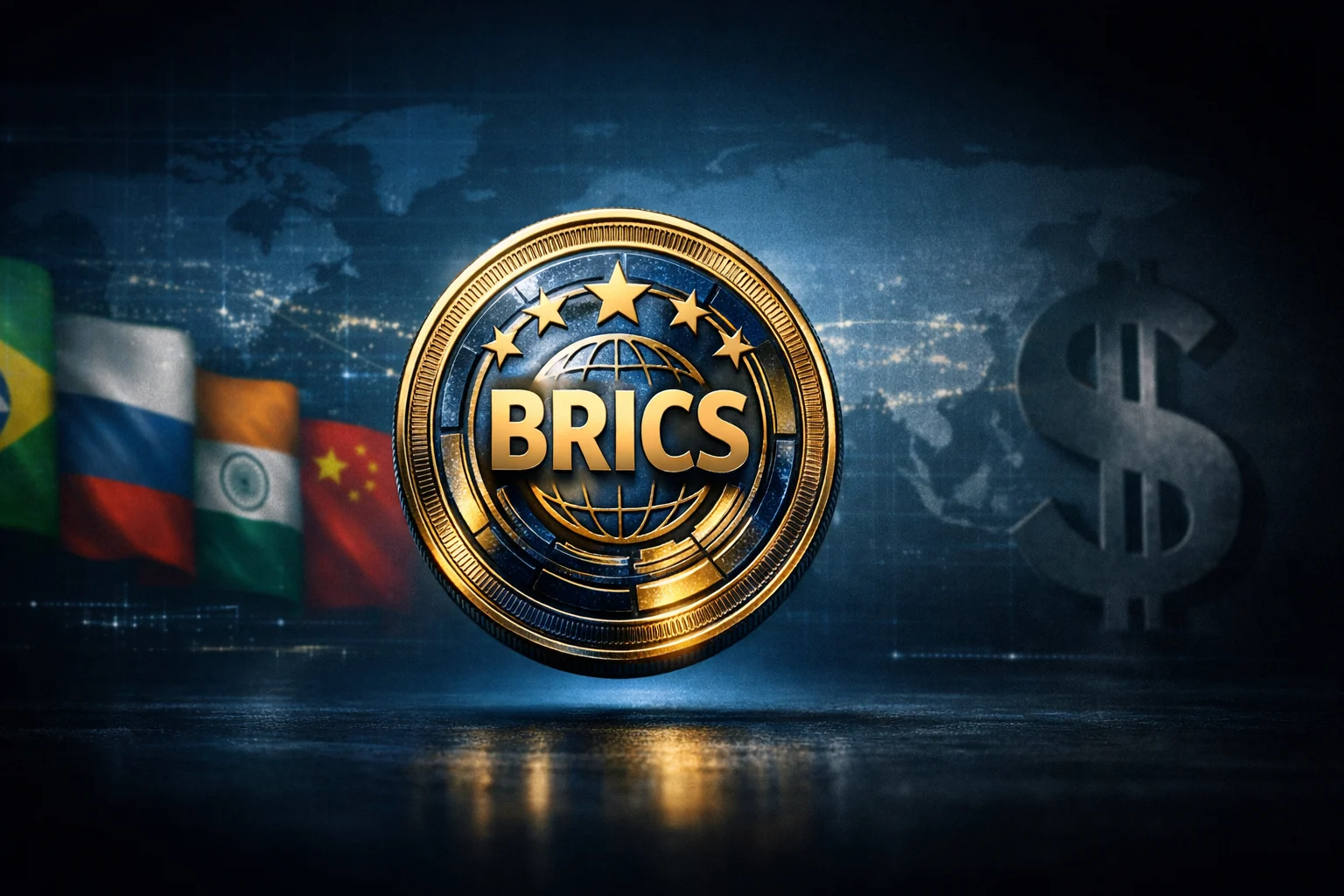
The viral image – shared widely on Twitter, Instagram and Telegram – appears to symbolize a physical BRICS note or coin, sparking speculation that the currency has already been launched.
But masculinity reveals something deeper:
- People aren’t reacting to the currency – they’re reacting to the idea that the dollar may no longer be untouched.
- This reflects the growing global appetite for:
- monetary multipolarity
- Alternatives to Western financial dominance
- A more balanced global financial structure
Impact on global economy
1. Gradual de-dollarization, not collapse
Contrary to sensationalist headlines, the BRICS currency will not replace the US dollar overnight. Dollar still dominates:
- global repository
- debt market
- trade invoice
However, even a 5-10% variation from dollar-based trading is historically significant.
2. Energy markets may be the first test
If oil and gas transactions – particularly those involving Russia, Iran, Saudi Arabia or the United Arab Emirates – begin to be settled in non-dollar format, it could gradually weaken the petrodollar system.
3. Strong regional financial block
The BRICS settlement system can lead to:
- ASEAN currency framework
- African Regional Payment Systems
- Latin American business units
This points towards a multi-currency world, not a single replacement hegemony.
Why is the United States worried?
1. Dollar dominance = strategic power
The US dollar gives Washington:
- acceptance leverage
- cheap borrowing costs
- global financial impact
Any alternative—even a partial one—undermines that power.
2. Decrease in demand for US Treasuries
If countries settled trade in non-dollar units, they could potentially hold fewer US Treasury bonds:
- increasing US borrowing costs
- weakening fiscal flexibility
3. Precedent Risk
The bigger concern is not about BRICS alone, but who is next. If successful, the model can be replicated by other blocks.
NewsWell Insights: What Most Analysts Are Missing
Insight 1: It’s about systems, not symbols
The viral currency image distracted many people from the real story:
BRICS is building parallel financial pipelines—payments rails, clearing systems, development banks and trade settlement mechanisms.
Currencies follow the system, not the other way around.
Insight 2: India’s role is strategic, not ideological
India is not anti-dollar, but is a supporter of alternatives. By supporting BRICS discussions while maintaining strong Western ties, India positions itself as a bridging power in a fragmented world.
This balancing act enhances India’s advantage on both sides.
Insight 3: China wants stability, not shock
Despite popular narratives, China has nothing to gain from a sudden dollar collapse. Its goal is risk diversification, not financial chaos. Expect slow, carefully managed choices, not sudden disruption.
Insight 4: Markets fear narrative shifts more than reality
Financial markets respond less to actual trading volume and more to expectations. Even limited BRICS adoption could reshape investor psychology, leading to changes in capital flows over time.
Challenges facing the BRICS currency
Despite the promotion, major obstacles remain:
- different inflation rates
- lack of political trust
- exchange rate volatility
- Governance and transparency concerns
- Unequal economic size within BRICS
These challenges explain why the approach is not revolutionary, but incremental.
What happens next?
Short term:
- pilot trade settlements
- digital currency experiment
- bilateral currency exchange extension
Medium term:
- BRICS Clearing Mechanism
- Energy and Commodity Pricing Options
- sequential reserve diversification
Long term:
A multipolar monetary system, where no one currency is completely dominant
Final Take: A hint, not a shock
The viral “first look” of the BRICS currency is less about a new banknote and more about a changing mindset.
The world is moving forward:
Dollar dominance → Dollar coexistence
And that change – slow, uneven, but irreversible – is why this story matters.
Newswell view:
The BRICS currency debate is not a threat – it is a mirror reflecting a world that no longer wants a single financial center of gravity. The future is not of any one currency, but of choice, balance and flexibility.